What are the key benefits of implementing Dynamics 365 ERP?
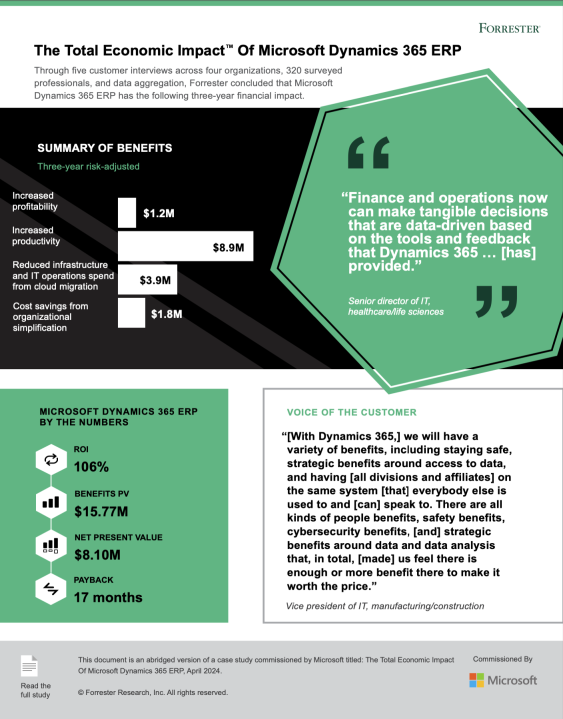
Organizations that implement Dynamics 365 ERP can expect several key benefits, including increased profitability from real-time visibility and enhanced decision-making, improved productivity through unified data access and streamlined processes, and reduced infrastructure costs due to cloud migration. For instance, the composite organization in the study reported a potential increase in profitability of over $1.2 million over three years, along with productivity savings of approximately $8.9 million from time saved by employees across various departments.
How does Dynamics 365 ERP improve operational efficiency?
Dynamics 365 ERP enhances operational efficiency by consolidating data and automating workflows, which reduces reliance on disparate systems. This integration allows for real-time insights that improve decision-making and operational agility. For example, survey respondents indicated that finance and accounting employees saved an average of 14.5 hours per week, while supply chain and logistics employees saved about 8.7 hours per week, leading to significant improvements in processes such as inventory management and order fulfillment.
What are the costs associated with Dynamics 365 ERP?
Organizations can expect to incur costs related to user subscriptions, which total approximately $4.4 million over three years for the composite organization studied. Additionally, implementation costs, including internal efforts and support from systems integrators, are estimated at around $3.2 million over the same period. Overall, the composite organization experienced total costs of about $7.7 million, which is offset by benefits totaling $15.8 million, resulting in a net present value of $8.1 million.





 Sign in with LinkedIn